Solana Blockchain: The High-Speed, Low-Cost Platform for dApps and DeFi | Complete Guide 2025
June 5, 2025
Building Tomorrow: Inside ETHGlobal New Delhi Hackathon 2025
October 10, 2025
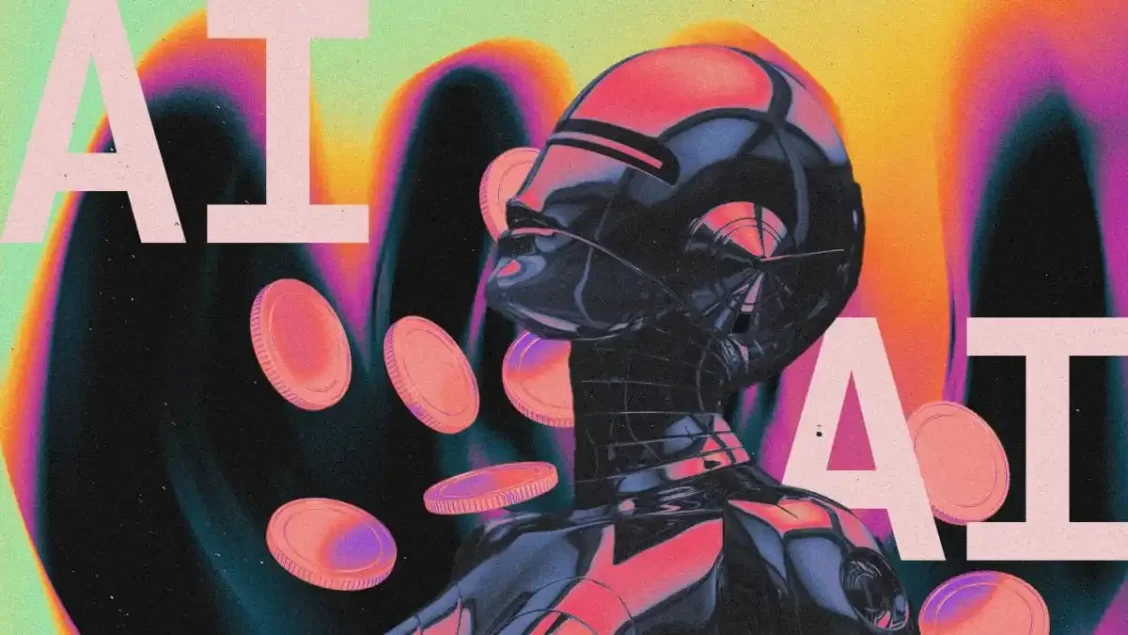
What unites the heart of two significant technologies transforming our world: Artificial Intelligence (AI) and Blockchain. ? This blog answers this question and offer unique perspective on the emerging world of “tokens”
The answer is a simple word, “token,” but its meaning, while different in each domain, beautifully converges around a powerful idea: the smallest, most fundamental unit of value or meaning.
Tokens in the World of AI: The Building Blocks of Language
When we talk about tokens in AI, especially within Natural Language Processing (NLP), we’re referring to the smallest unit of text that an AI model processes. Think of it as how an AI breaks down our complex human language into manageable pieces.
- What are tokens? These can be individual words, parts of words (sub-words), or even single characters. For instance, the word “Blockchain” itself might be tokenised into “Block” and “chain”.
- Why are tokens important? AI models, like GPT, use them to understand context, meaning, and how words connect in a sentence. Tokens are basically the building blocks that help machines understand language.
Tokens in the Blockchain Universe: The Units of Digital Value
Now, let’s look at tokens in Blockchain. Here, a token represents a digital asset or a unit of value securely recorded on a decentralised ledger. These aren’t just abstract concepts; they are real digital entities that power our decentralised world.
- Various types of blockchain tokens:
- Utility Tokens: These tokens provide you with access to a specific product or service within an ecosystem.
- Security Tokens: Imagine owning a digital share in a company or a piece of real estate – that’s what security tokens represent, fractional ownership in real-world assets.
- NFTs (Non-Fungible Tokens): These are unique digital certificates for things like art, collectibles, or even identity. Each NFT is one-of-a-kind and can’t be replaced.
- Stablecoins: These are digital coins tied to real-world money, like the US dollar. They stay steady in value and give stability in the often-changing crypto market.
The purpose of blockchain tokens: they enable fractional ownership, facilitate seamless peer-to-peer transactions, and bring programmable logic to life through smart contracts. They are the very building blocks of trust and ownership in decentralised systems.
The Common Thread: Meaning Meets Value
At first glance, the AI token (a unit of language) and the Blockchain token (a unit of value) might seem worlds apart. However, “The Token Revolution” beautifully highlights their shared core principle:
- In AI, tokens represent the smallest unit of meaning.
- In Blockchain, tokens represent the smallest unit of value.
Both fields leverage tokens as fundamental enablers – one for intelligence and understanding, the other for trust and verifiable ownership. It’s this conceptual alignment that makes their potential convergence so exciting!
The Role of Tokenomics in the New Age of Digital Assets
To truly grasp the power of tokens, we need to understand Tokenomics. This term is simply “Token” combined with “Economics”. It describes the system that dictates how a token works, why it holds value, and how it circulates within its specific ecosystem.
Traditional economics explains money, tokenomics illuminates the creation, distribution, and use of digital tokens.
Understanding Tokenomics: Key Drivers
- Supply Mechanism – Some tokens have a limited supply (like Bitcoin, capped at 21 million), which can make them scarce and valuable. Others can be minted continuously (like stablecoins or reward tokens).
- Utility: A token isn’t just a digital coin; it needs a clear reason to exist. This could be for accessing services, paying transaction fees, participating in governance votes, or rewarding contributors.
- Incentives – To keep the ecosystem alive, users are often rewarded in tokens for their actions. For example, providing liquidity, sharing data, offering computing power, or even simply holding tokens can earn rewards.
- Governance – In many projects, token holders are like shareholders. They can vote on updates, changes, or policies of the platform. This makes the system more democratic.
- Distribution: How tokens are initially distributed—whether through mining, staking, airdrops, or public/private sales—significantly impacts the fairness and sustainability of the entire project.
Tokens in the Digital Future and Beyond
Now, imagine the truly transformative potential when AI and Blockchain come together. Tokenomics plays an even more exciting role in this convergence. We’re talking about a future where systems are not only intelligent but also inherently trustless.
Here are some possibilities:
- AI-as-a-Service: Imagine renting AI model and paying for its usage per token of text processed, much like paying per message on ChatGPT. Blockchain tokens could facilitate these payments automatically, transparently, and globally, revolutionising access to AI.
- Decentralised Data Marketplaces: High-quality data is the fuel of AI. In a decentralised world, individuals who contribute valuable data—be it medical records, images, or text—could earn tokens as fair rewards, ensuring they benefit directly from their contributions.
- Compute Sharing Networks: Training advanced AI models demands immense computing power. The future could see individuals with spare GPU or CPU power renting it out in exchange for tokens, effectively creating a global, decentralised AI supercomputer.
- Fairer Global Economies: Today, most amounts of AI and data are concentrated in the hands of a few large corporations. With blockchain tokens, ownership and access can be distributed more fairly, allowing data providers, developers, and users to share in the benefits together.
Final Thoughts
Tokens, in both AI and Blockchain, embody the idea of breaking down complexity into the smallest, most actionable units. In AI, they are the foundational elements of communication, enabling machines to understand and generate human language. In Blockchain, they are the root of digital economies, carrying value, ownership, and utility across decentralised networks.
When we look at them together, tokens illustrate a powerful convergence: the tokenization of meaning and the tokenization of value. This dual transformation is reshaping not only how we interact with technology but also how we collaborate, trade, and innovate globally. The synergy between AI and Blockchain shows that the future will be defined by systems that are both intelligent and trustless — where every word and every unit of value is traceable, transparent, and impactful.
Tokens are far more than technical constructs; they are laying the foundation of a new digital era, one where communication and commerce are seamlessly integrated to build fairer, smarter, and more inclusive ecosystems for everyone.